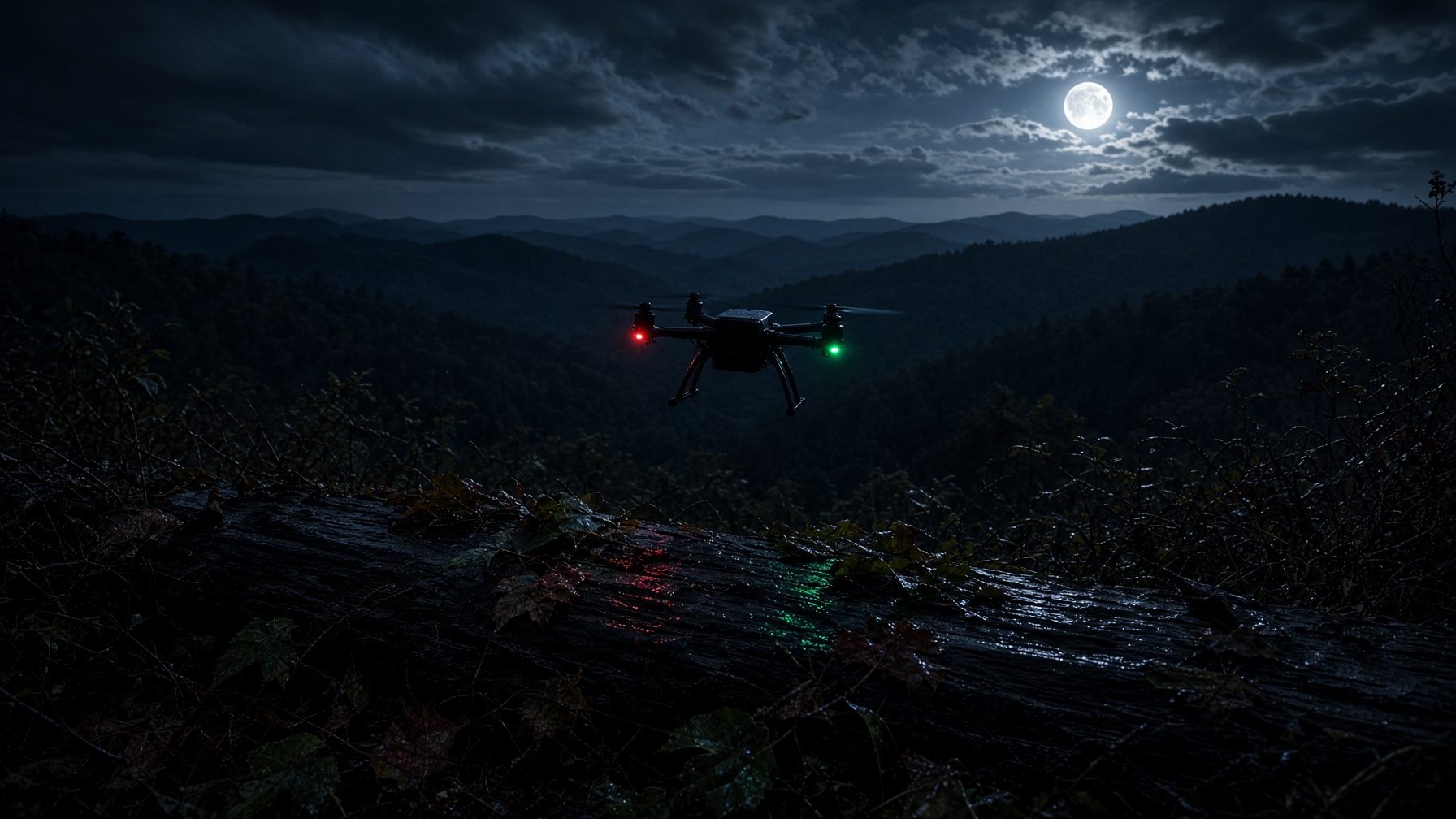

From last blood to a GPS mark.
Maryland only — eight north-central counties. This is how a recovery works without turning the woods into a circus. Deer recovery is not offered in Pennsylvania.
01.
Pin the shot
Mark last blood, the shot location, and where you last saw the deer. Stay put if it's safe. Don't push it.
A dropped pin is worth more than a story. If you're in a hollow with no service, drop it before you leave the car. Note wind, last sighting, and whether other hunters are on the property.
02.
Thermal search
Zac grids the timber with a thermal camera — night, laurel, and thick stuff included. You stay on the phone.
He grids from the impact, then along likely escape routes — downhill, into cover, toward water. He flies legal altitudes, keeps the aircraft in visual line of sight, and talks the whole time.
03.
Live coordinates
If it's there, you get a GPS mark, a heading, and what the heat looks like — tight and bright, or cooling.
A living deer throws a brighter signature than one that's been down a while. Zac will tell you what he's seeing — proof of life when he can, an honest read when he can't.
04.
You recover
You or your party tag it and get it out. He will not trespass, and he will not drag a deer off someone else's land.
Tagging, field dressing, and getting it out are yours. He will wait on the radio until you're on it. Landowner permission stays required.
The deer gets harder to find if you push it.
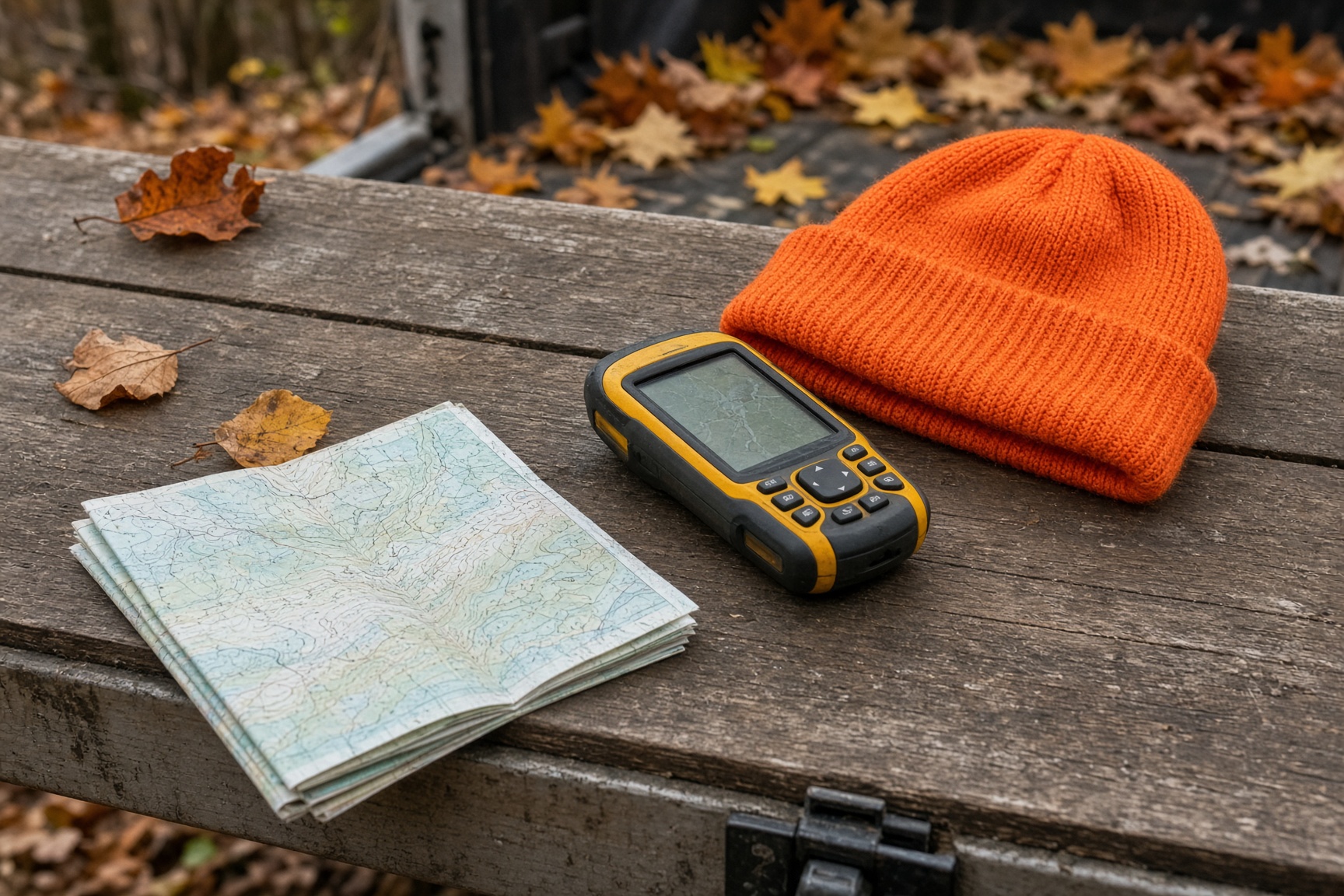
- 01.Drop a pin on the shot and on last blood before you lose signal.
- 02.Don't push the deer. Sit down, drink water, wait.
- 03.Note the hit: angle, height, how it ran, last sighting.
- 04.Confirm landowner permission and a meeting spot a car can reach.
- 05.Keep dogs in until the aircraft is down.
- 06.Have your tag, knife, and a light ready.
Ready when you are.
$100 for a one-hour search. Another $50 if he finds it.